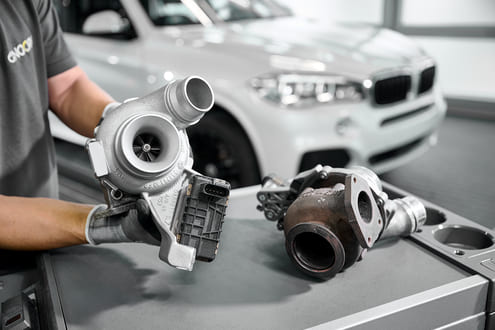
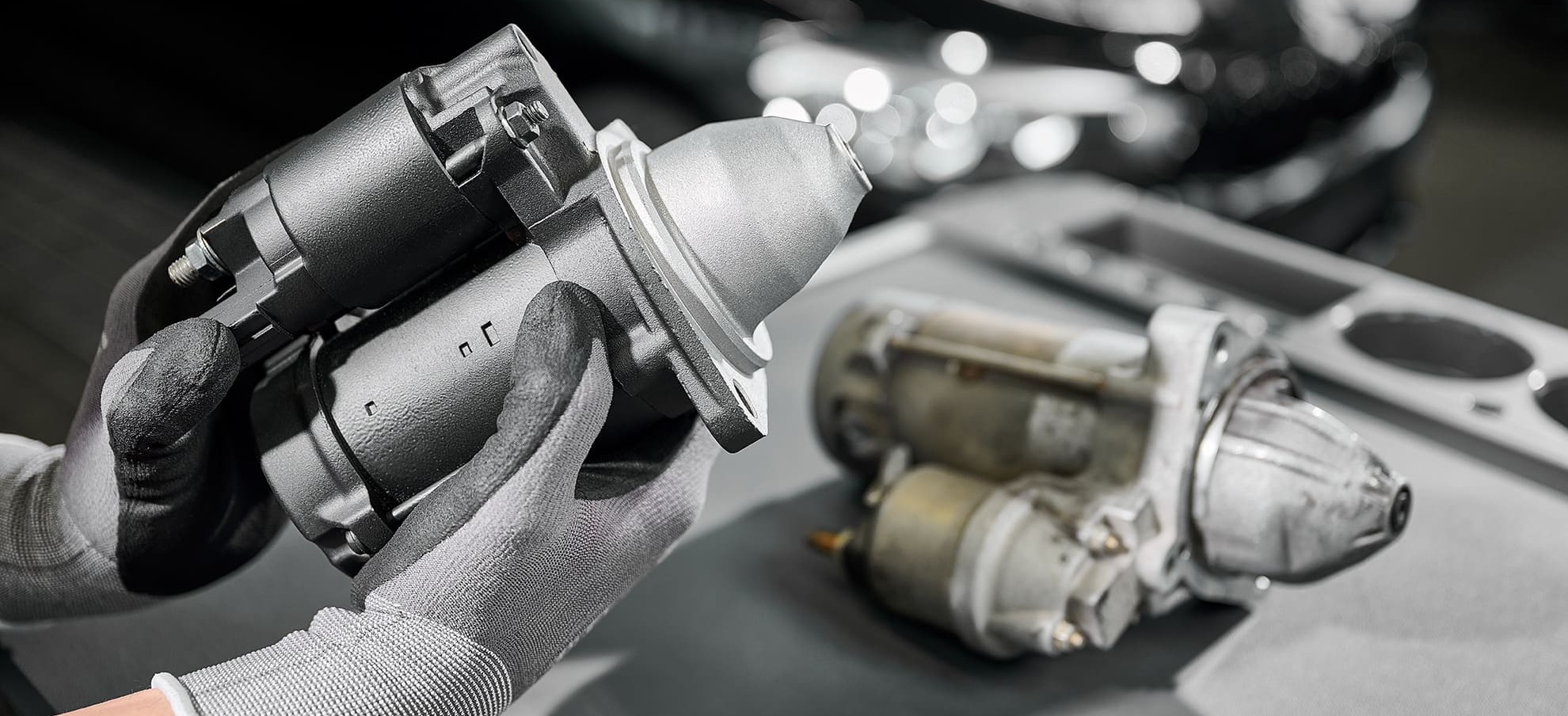
What does Reman mean?
Reman is short for "Remanufacture", which in German means "Wiederaufbereitung" (reconditioning).
It is an international term that describes the process of thoroughly reworking and renewing used spare parts.
Where do the defective spare parts come from?
As a joint venture of the BMW Group, we work closely with the BMW network.
The defective spare parts (technical term: cores) that we remanufacture come directly from BMW dealer workshops.
These workshops collect defective components from BMW vehicles that have been removed for various reasons — such as maintenance, upgrades, or the replacement of worn parts.
Thanks to our close cooperation with BMW dealer workshops, we ensure a continuous supply of high-quality used parts that are ideally suited for remanufacturing.
These components then go through our comprehensive remanufacturing process, where they are disassembled, cleaned, inspected and renewed — so that they once again meet the quality and reliability of a new part.
What is the difference compared to cheaper remanufactured spare parts?
There are different remanufacturing standards, and not all remanufactured parts are the same.
The main difference between lower-priced remanufactured parts and Encory Premium Reman Parts lies in the quality, the scope of the process and the condition of the original components.
At Encory, we remanufacture at OEM level (Original Equipment Manufacturer).
We only remanufacture original BMW spare parts — meaning our remanufactured parts meet the same high quality standards as brand-new originals.
Rely on quality and benefit from premium remanufactured parts that meet the highest standards while being environmentally friendly and cost-efficient.
Sustainability benefits of remanufactured spare parts
Remanufacturing spare parts offers numerous environmental benefits and contributes to a more sustainable future.
Here are some of the most important sustainability advantages:
1. Conservation of resources
-
Reduced raw material usage: Reusing existing parts reduces the need for new raw materials such as metals and plastics.
-
Energy savings: Manufacturing new parts requires significantly more energy than remanufacturing — reducing overall energy consumption and environmental impact.
2. Waste reduction
-
Less landfill waste: Used parts that are remanufactured do not end up in landfills, reducing waste and pollution.
-
Extended product life: Remanufacturing extends the lifespan of spare parts, resulting in less waste and more efficient use of resources.
3. Reduction of emissions
-
Lower CO₂ emissions: Producing new parts typically generates higher CO₂ emissions compared to remanufacturing — meaning emissions are significantly reduced.
-
Reduced environmental burden: Lower energy consumption and decreased raw material extraction help reduce harmful emissions and environmental impact.
4. Support for the circular economy
-
Reuse and recycling: Remanufactured parts promote circular-economy principles by keeping products and materials in the value chain for as long as possible.
-
Sustainable production: Remanufacturing supports sustainable manufacturing practices and helps conserve natural resources.
5. Cost efficiency and environmental awareness
-
Affordable alternatives: Remanufactured parts provide a cost-effective alternative to new components without compromising on quality.
-
Promoting sustainability awareness: Choosing remanufactured parts supports environmentally responsible practices and encourages sustainable solutions.
In summary, remanufactured spare parts not only offer financial advantages — they also make a significant contribution to protecting the environment.
By choosing remanufactured components, you actively support sustainability and play an important role in environmental protection.